
Introduction
Therapy for cancer fatigue is a critical part of modern oncology care. Cancer-related fatigue is persistent, overwhelming, and not relieved by rest. Moreover, it affects physical function, cognition, mood, and adherence to treatment. Therefore, patients and clinicians need structured, evidence-based strategies. This article reviews validated therapies, supportive care options, and emerging integrative approaches. All recommendations follow current medical evidence and international guidelines.
Understanding Cancer-Related Fatigue
Cancer-related fatigue (CRF) differs from ordinary tiredness. It is severe, chronic, and multifactorial. Importantly, CRF can occur before diagnosis, during treatment, or years after therapy.
Key Characteristics
- Lasts weeks or months
- Disproportionate to activity level
- Not fully relieved by sleep
- Affects physical, emotional, and cognitive domains
According to the World Health Organization, fatigue is one of the most disabling cancer symptoms worldwide.
Why Cancer Fatigue Happens
Cancer fatigue develops due to interacting biological and psychological mechanisms. Understanding these causes guides effective therapy.
Major Contributing Factors
- Inflammation: Elevated cytokines disrupt energy metabolism
- Anemia: Reduced oxygen delivery to tissues
- Treatment toxicity: Chemotherapy and radiotherapy damage healthy cells
- Hormonal changes: Especially in breast and prostate cancer
- Sleep disturbance and depression: Common yet often under-treated
Consequently, therapy for cancer fatigue must be individualized rather than generic.
Evidence-Based Medical Therapies for Cancer Fatigue
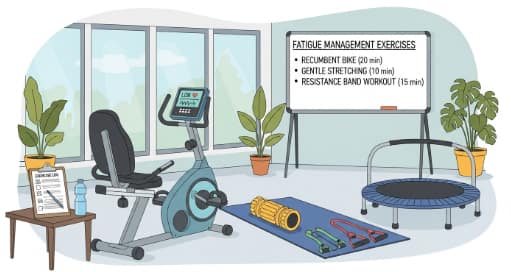
1. Exercise Therapy (Strongest Evidence)
Supervised physical activity is the most effective intervention. Multiple randomized trials confirm its benefit.
Recommended formats:
- Moderate aerobic exercise (walking, cycling)
- Light resistance training
- Yoga or tai chi for frail patients
A meta-analysis indexed in PubMed shows consistent fatigue reduction across cancer types.
2. Cognitive Behavioral Therapy (CBT)
CBT targets unhelpful thought patterns and behavioral avoidance. As a result, patients regain functional energy.
CBT benefits include:
- Improved sleep efficiency
- Reduced emotional exhaustion
- Better treatment coping
Notably, CBT is endorsed by the National Institutes of Health for cancer symptom management.
3. Management of Reversible Medical Causes
Before adding supplements or medications, clinicians must correct underlying problems.
| Condition | Intervention | Expected Benefit |
|---|---|---|
| Anemia | Iron therapy or transfusion | Improved oxygenation |
| Pain | Multimodal analgesia | Reduced energy drain |
| Depression | Psychotherapy or medication | Mental energy recovery |
| Sleep disorders | Sleep hygiene or CBT-I | Restorative sleep |
This step is essential in any therapy for cancer fatigue plan.
Pharmacologic Options: Limited but Targeted
Drugs play a secondary role. However, they may help selected patients.
Medications Sometimes Used
- Psychostimulants (e.g., methylphenidate): Short-term benefit in advanced disease
- Modafinil: May help patients with severe daytime sleepiness
Nevertheless, these options require close supervision. They are not first-line therapies.
Nutrition-Based Therapy for Cancer Fatigue
Nutrition strongly influences energy metabolism. Therefore, dietary assessment is essential.
Core Nutritional Principles
- Adequate protein intake to preserve muscle mass
- Stable blood glucose through balanced meals
- Correction of vitamin deficiencies
- Sufficient hydration
Registered dietitians trained in oncology should guide nutrition-based therapy.
Integrative and Mind–Body Approaches
Several non-pharmacologic therapies show moderate evidence and excellent safety.
Supported Interventions
- Mindfulness-based stress reduction
- Acupuncture
- Gentle massage therapy
These approaches reduce fatigue indirectly by improving sleep, pain, and stress regulation.
Role of Herbal Medicine: A Cautious Perspective
Herbal medicine attracts interest among cancer survivors. However, scientific rigor is essential.
Korean Ginseng (Brief, Evidence-Aware Note)
Korean ginseng contains ginsenosides with potential anti-fatigue effects. Small clinical studies suggest modest improvements in energy and quality of life. Nevertheless:
- Evidence remains limited
- Drug–herb interactions are possible
- Standardization varies widely
Therefore, ginseng should never replace established therapy for cancer fatigue. Always consult an oncologist before use.
Personalized Therapy for Cancer Fatigue
No single approach works for everyone. Instead, effective management combines multiple strategies.
Individualized Care Plan Includes
- Symptom severity assessment
- Cancer type and treatment stage
- Comorbid conditions
- Patient preferences and physical capacity
This integrated model delivers the best outcomes.
Safety, Monitoring, and Professional Guidance
All fatigue interventions must prioritize safety.
Key recommendations:
- Discuss symptoms openly with healthcare providers
- Avoid unverified supplements
- Monitor response and side effects regularly
- Adjust therapy as cancer status changes
Professional supervision ensures ethical and effective care.
Conclusion
Therapy for cancer fatigue requires a structured, evidence-based, and patient-centered approach. Exercise, cognitive therapy, medical optimization, and nutrition form the foundation. Integrative methods can support recovery when used responsibly. Although herbal options like Korean ginseng show limited promise, they must remain adjunctive. Ultimately, collaboration between patients and healthcare professionals ensures safe energy restoration and improved quality of life.
Read also: Ginseng for Cancer Fatigue: Evidence-Based Benefits of Korean Ginseng for Energy Recovery