
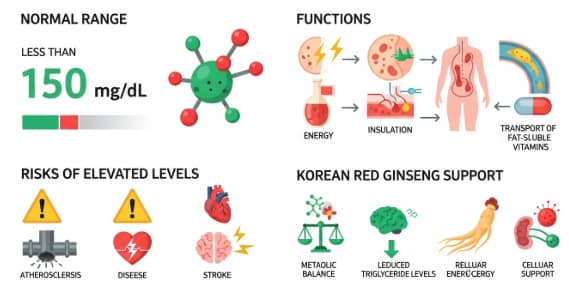
Maintaining healthy triglyceride levels is fundamental to long-term metabolic and cardiovascular health. Triglycerides — a form of stored fat circulating in the bloodstream — act as an essential energy source for the body. However, when their concentration becomes too high, they become a potent risk amplifier for metabolic dysfunction, inflammation, and vascular disease.
The keyword “triglycerides normal range” refers not only to laboratory values but also to the broader biological context: how triglycerides are formed, regulated, transported, and sometimes dysregulated in metabolic disorders. Understanding this helps individuals make informed decisions about lifestyle, nutrition, and supportive herbal supplements like Korean Red Ginseng.
What Exactly Are Triglycerides? A Deeper Biochemical View
Chemically, triglycerides are triacylglycerols (TAGs) — molecules composed of:
- 1 glycerol backbone
- 3 fatty acid chains (saturated or unsaturated)
They are packaged into lipoprotein particles, mainly:
- Chylomicrons — transport triglycerides from the intestines
- VLDL (Very-Low-Density Lipoprotein) — produced by the liver to transport endogenous triglycerides
As VLDL unloads triglycerides into tissues, it becomes IDL and may eventually convert to LDL.
Triglycerides Are Central to Energy Metabolism
- Muscles oxidize fatty acids for sustained energy.
- Adipose tissue stores triglycerides as long-term reserves.
- The liver regulates triglyceride synthesis depending on carbohydrate intake, hormones, and metabolic demand.
High levels reflect that something has disrupted this finely tuned system.
Triglycerides Normal Range — Clinical Guidelines
The commonly accepted laboratory ranges:
| Triglyceride Category | Level (mg/dL) | Meaning |
|---|---|---|
| Normal | <150 mg/dL | Optimal metabolic state |
| Borderline High | 150–199 mg/dL | Early dysregulation |
| High | 200–499 mg/dL | Significant cardiometabolic risk |
| Very High | ≥500 mg/dL | Increased pancreatitis risk |
Maintaining triglycerides below 150 mg/dL is associated with lower cardiometabolic risk, better insulin sensitivity, and healthier liver function.
How the Body Regulates Triglycerides: The Science Behind It
1. Liver Synthesis (De Novo Lipogenesis)
The liver converts excess carbohydrates — especially fructose and refined starches — into fatty acids, which are assembled into triglycerides and exported as VLDL.
Factors that increase liver triglyceride synthesis:
- High-sugar diet
- Alcohol consumption
- Insulin resistance
- Inflammatory cytokines
- Hormonal imbalance
2. Insulin and Hormones
Insulin plays a central role. When insulin resistance develops:
- The liver makes more triglycerides
- Fat cells release more free fatty acids
- VLDL production increases
- HDL levels may drop
This explains why elevated triglycerides are strongly linked to type 2 diabetes and metabolic syndrome.
3. Lipoprotein Lipase (LPL) Activity
LPL breaks down triglycerides in the bloodstream so cells can use fatty acids for fuel.
Low LPL activity → high circulating triglycerides.
LPL is reduced by:
- Sedentary lifestyle
- High carbohydrate intake
- Genetic disorders
- Inflammation
Exercise improves LPL activity significantly.
Why High Triglycerides Are a Serious Concern
1. Atherogenic Dyslipidemia
High triglycerides often accompany:
- Low HDL
- Small, dense LDL particles
- High VLDL particles
- Increased oxidized LDL
This pattern is strongly linked to cardiovascular risk.
2. Insulin Resistance and Diabetes
Triglycerides interact with glucose metabolism:
- Excess triglycerides impair insulin receptor signaling
- Insulin resistance increases liver fat synthesis
- A vicious cycle develops
3. NAFLD (Non-Alcoholic Fatty Liver Disease)
When liver cells accumulate triglycerides, it can lead to:
- Steatosis
- Inflammation (steatohepatitis)
- Fibrosis
- Possible progression to cirrhosis
4. Pancreatitis (Very High Levels)
Extremely high levels (>500 mg/dL) increase pancreatic inflammation risk.
Main Causes of Elevated Triglycerides
Dietary Factors
- Excessive carbohydrate intake
- Fructose-rich foods and beverages
- Alcohol
- Trans fats
- Overeating in general
Lifestyle Factors
- Physical inactivity
- Weight gain, especially abdominal fat
- Chronic stress (cortisol increases lipogenesis)
Medical and Genetic Factors
- Hypothyroidism
- Kidney disease
- Liver fat accumulation
- Familial hypertriglyceridemia
- Poor blood sugar control
How to Lower and Maintain Triglycerides Within Normal Range
1. Reduce sugar and refined carbs
Lower carbohydrate intake improves insulin sensitivity and reduces liver lipogenesis.
2. Increase omega-3 fatty acids
EPA and DHA reduce liver triglyceride synthesis.
3. Exercise consistently
Physical activity activates LPL, increasing fat burning and reducing VLDL particles.
4. Achieve and maintain healthy weight
Even moderate weight loss lowers triglycerides substantially.
5. Limit or avoid alcohol
Alcohol stimulates triglyceride production in the liver.
6. Improve sleep and stress management
Poor sleep increases cortisol and can elevate triglycerides.
The Potential Supportive Role of Korean Red Ginseng in Triglyceride Management
Korean Red Ginseng (Panax ginseng) has been traditionally used for vitality and balance, and modern research has explored its potential effects on metabolic health. While it is not a treatment for high triglycerides, its bioactive compounds — ginsenosides, polyacetylenes, panaxans, and ginseng polysaccharides — have shown biological activities that may support healthier lipid metabolism.
How Korean Red Ginseng May Support Lipid Balance (Scientific Overview)
1. Modulation of Lipid Synthesis Pathways
Certain ginsenosides may interact with pathways involved in:
- Reducing hepatic fatty acid synthesis
- Modifying lipid oxidation rate
- Supporting healthier VLDL secretion dynamics
These mechanisms may help maintain triglycerides within a normal range when combined with healthy lifestyle habits.
2. Improved Insulin Sensitivity
Better insulin signaling reduces lipogenesis (fat production) in the liver.
Some studies have observed:
- Improved glucose uptake
- Reduced inflammatory markers
- Enhanced insulin receptor activity
This indirectly supports triglyceride regulation.
3. Anti-Inflammatory and Antioxidant Properties
Oxidative stress is a key driver of metabolic dysregulation.
Ginsenosides exhibit properties that may:
- Reduce inflammatory cytokine activity
- Support endothelial health
- Modulate oxidative stress pathways
These mechanisms may support overall lipid balance.
4. Potential Support for Liver Health
Korean Red Ginseng has been studied for its potential effects on liver fat accumulation.
Healthier liver function contributes directly to healthier triglyceride levels.
5. Energy Metabolism Enhancement
Red Ginseng has been traditionally associated with improved physical vitality.
Better mitochondrial function and energy utilization may help reduce fat storage.
Important Note
Korean Red Ginseng should be viewed as a supportive companion to a healthy lifestyle, not a replacement for medical treatment or professional care.
Conclusion
Understanding the triglycerides normal range provides a powerful foundation for protecting long-term health. Elevated triglycerides are more than just a number — they are a marker of deeper metabolic imbalance involving insulin signaling, liver function, inflammation, and energy metabolism.
By combining:
- balanced nutrition,
- regular exercise,
- maintaining healthy body weight, and
- supportive herbal options such as Korean Red Ginseng,
individuals can take meaningful steps to support healthier lipid levels and overall metabolic wellness.


