
Cholesterol is one of the most misunderstood substances in human biology. For decades, it has been associated with heart disease, blocked arteries, and dietary fat. However, from a scientific perspective, cholesterol is not inherently harmful—in fact, it is vital for life.
The key question is balance: how much cholesterol circulates in the bloodstream, how it is transported, and how lifestyle factors influence these levels.
In this comprehensive guide, we explore what cholesterol is, how the body uses it, what modern research says about cholesterol and cardiovascular health, and how natural ingredients such as Korean ginseng may support overall metabolic wellbeing as part of a healthy lifestyle.
Understanding Cholesterol: More Than “Good” or “Bad”
Cholesterol is a sterol, a type of lipid molecule essential for:
- Building and repairing cell membranes
- Producing hormones (estrogen, testosterone, cortisol)
- Making vitamin D in the skin
- Creating bile acids, which digest dietary fats
- Supporting neurological health and membrane fluidity
According to the U.S. National Institutes of Health (NIH), the human body synthesizes most of the cholesterol it needs, especially through the liver.
Source: https://www.ncbi.nlm.nih.gov/books/NBK305897/
This means cholesterol is not an external “invader”—it is a fundamental biological component.
How Cholesterol Moves Through the Body
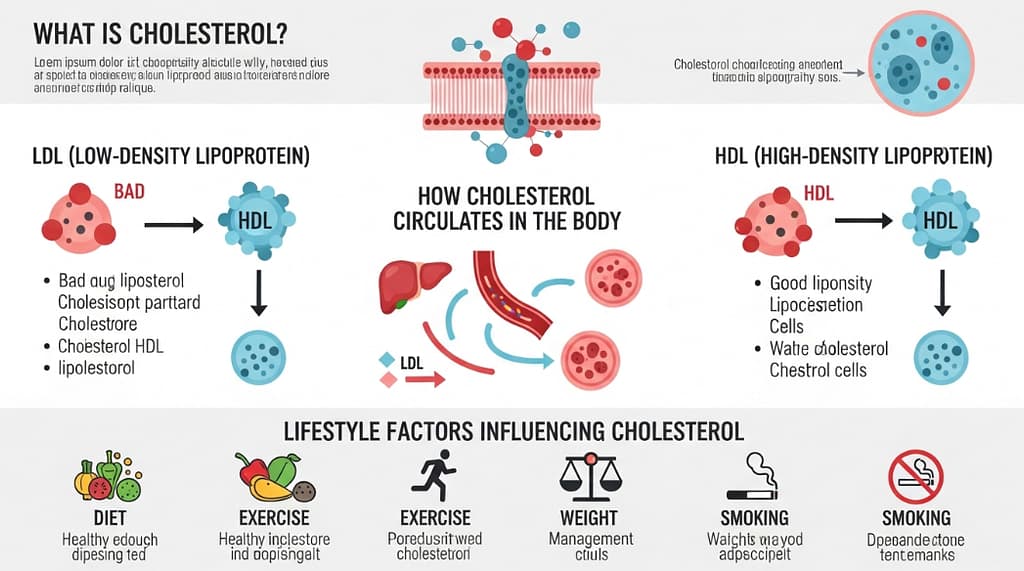
Because cholesterol is fat-based and cannot dissolve in water, it must be transported through the bloodstream by lipoproteins.
The main lipoproteins relevant to health are:
1. LDL Cholesterol (Low-Density Lipoprotein)
Frequently labeled as “bad cholesterol,” but this is an oversimplification.
LDL’s natural role is to deliver cholesterol to cells that need it for structural and hormonal functions.
Problems arise when LDL becomes excessive, especially when combined with inflammation, poor diet, and oxidative stress.
2. HDL Cholesterol (High-Density Lipoprotein)
Often called “good cholesterol” because it carries cholesterol away from tissues and arteries, returning it to the liver for breakdown or removal.
Higher HDL levels are typically associated with better cardiovascular health.
3. Triglycerides
A form of fat stored for energy.
Elevated triglycerides—especially combined with high LDL—may increase the risk of metabolic and cardiovascular complications.
CDC resource on cholesterol types:
https://www.cdc.gov/cholesterol/index.htm
Why Cholesterol Balance Matters
A healthy cardiovascular system depends on balance among LDL, HDL, and triglycerides.
Excess LDL—particularly small, dense LDL particles—may contribute to atherosclerosis, a gradual buildup of plaque inside arteries.
Plaque can:
- Narrow arteries
- Reduce oxygen supply
- Increase inflammatory activity
- Potentially rupture, causing clots
These mechanisms are central to the risk of:
- Coronary artery disease
- Heart attacks
- Peripheral artery disease
- Stroke
For a detailed explanation, see the American Heart Association:
https://www.heart.org/en/health-topics/cholesterol
How Cholesterol Is Regulated in the Body
Cholesterol metabolism is controlled by multiple systems:
1. The Liver: Master Regulator
The liver produces cholesterol, absorbs dietary cholesterol, converts cholesterol to bile acids, and removes excess cholesterol.
2. Dietary Intake
Foods rich in saturated fats and trans fats influence cholesterol production more strongly than dietary cholesterol itself.
(Recent scientific consensus recognizes this nuanced difference.)
3. Hormonal Signals
Insulin, thyroid hormones, and cortisol all influence cholesterol metabolism.
4. Genetics
Familial hypercholesterolemia is a condition where genes cause extremely high LDL levels regardless of diet or lifestyle.
5. Gut Microbiome
Emerging research shows gut bacteria influence bile acids, lipid absorption, and cholesterol conversion pathways.
NIH overview on cholesterol regulation:
https://www.ncbi.nlm.nih.gov/books/NBK326741/
Common Misconceptions About Cholesterol
Misconception #1: All cholesterol is bad
Reality: cholesterol is essential; imbalance is the issue.
Misconception #2: Dietary cholesterol is the main problem
Dietary cholesterol has less impact on blood levels than saturated fat, trans fat, and genetic factors.
Misconception #3: Only overweight people have high cholesterol
Genetics, age, stress, and hormonal changes affect cholesterol even in individuals with normal BMI.
Misconception #4: Medication is the only solution
Lifestyle modifications—diet, movement, sleep, and stress management—play a powerful role and are recommended by health authorities.
Lifestyle Factors Influencing Cholesterol Levels
Scientific evidence supports several modifiable factors:
1. Nutrition
Foods that may support healthy cholesterol levels include:
- Soluble fiber (oats, barley, chia, beans)
- Vegetables and fruits (rich in polyphenols)
- Omega-3 fatty acids (fatty fish, flaxseed)
- Nuts, seeds, and legumes
Foods that may raise LDL in many individuals:
- Saturated fats (fatty meats, butter, coconut oil)
- Trans fats (processed snacks, fast foods)
- Excessive refined carbohydrates
2. Physical Activity
Exercise can:
- Increase HDL
- Improve lipid metabolism
- Support weight balance
- Enhance vascular function
Recommended: 150 minutes per week, per WHO guidelines.
3. Sleep and Stress
High stress may elevate cortisol and influence cholesterol synthesis.
Poor sleep is also associated with dyslipidemia.
4. Tobacco and Alcohol
Smoking reduces HDL.
Excess alcohol raises triglycerides.
Where Does Ginseng Fit Into This—Safely and Scientifically?
Ginseng, particularly Panax ginseng (Korean red ginseng), contains ginsenosides—bioactive compounds that may support various aspects of physiological balance.
⚠️ Important Note (EEAT & Google Health Compliance)
Ginseng is not a treatment for cholesterol issues.
It cannot replace medical therapy or professional diagnosis.
It may play a supportive role only as part of a healthy lifestyle.
Scientific studies have explored how ginseng may influence metabolic pathways, including:
1. Antioxidant Support
Ginsenosides (Rg1, Rb1, Rg3) may help reduce oxidative stress, which plays a role in vascular and metabolic health.
2. Support for Healthy Inflammatory Response
Research suggests ginseng may modulate inflammatory mediators involved in metabolic processes—but these results vary.
3. Possible Influence on Lipid Metabolism
Some studies examine whether ginseng may help the body regulate enzyme activity related to cholesterol synthesis and clearance.
However, evidence is not conclusive for therapeutic effects.
4. Vascular and Circulatory Support
Ginseng has been studied for its potential role in supporting nitric oxide production, which may contribute to vascular health.
NIH resource on herbal supplements (general):
https://www.nccih.nih.gov/health/ginseng
So what is safe to say?
✔ Ginseng may support overall wellness
✔ Ginseng may support energy, resilience, and metabolism
✔ Ginseng is not a treatment for high cholesterol
✔ People with cholesterol concerns should consult healthcare professionals
Ginseng fits into a holistic lifestyle, not a medical regimen.
How to Maintain Healthy Cholesterol Levels (Evidence-Based)
1. Follow a Heart-Friendly Diet
- Increase soluble fiber
- Reduce trans & saturated fats
- Choose whole foods
2. Stay Physically Active
Regular movement improves lipid balance.
3. Stop Smoking
Smoking lowers HDL and damages blood vessels.
4. Manage Stress
Mindfulness, sleep hygiene, and meditation can help.
5. Follow Medical Advice & Get Routine Check-Ups
Blood lipid testing remains essential for monitoring.
Conclusion
Cholesterol is a fundamental molecule essential for human life.
Problems arise when cholesterol levels—particularly LDL and triglycerides—become imbalanced.
Lifestyle, genetics, and metabolic factors play major roles.
While ginseng is not a cholesterol treatment, its bioactive compounds make it a popular choice for general wellness, metabolic support, and vitality as part of a balanced lifestyle.
For those choosing to include ginseng in their wellness routine, always select authentic, high-quality Korean red ginseng from reputable sources.


