In a world where the average adult hits a mental wall around 3 PM, energy has become a daily battle. Many rely on caffeine to survive back-to-back meetings, workouts, or the relentless demands of parenthood. But the “solution” often becomes the problem. Caffeine can feel powerful at first, but over time it contributes to jitters, sleep disruption, adrenal strain, and dependency. That’s why more adults are searching for cleaner, stable, non-stimulant alternatives—something that provides energy without the crash.
Enter ginseng extract for energy boost, a natural adaptogen used for centuries in Korean and traditional Asian medicine. Modern research now confirms what ancient practitioners observed: ginseng doesn’t “force” energy like caffeine—it optimizes how your body produces it. Instead of overstimulating your nervous system, ginseng enhances mitochondrial efficiency, regulates stress hormones, and supports oxygen utilization. In other words, it works with your biology, not against it.
This article explores how ginseng extract fuels sustainable vitality, how it compares to stimulants, and how to use it effectively for mental and physical endurance.
Medical Disclaimer: This article is for informational purposes only and is based on current scientific literature. It is not intended to diagnose, treat, cure, or prevent any disease or condition, including chronic fatigue or adrenal insufficiency. Ginseng may interact with medications or be unsuitable for certain health conditions. Always consult your healthcare provider before starting any new supplement regimen.
The Modern Energy Paradox: Why Stimulants Fail Us
The Caffeine Cycle: Short-Term Alertness vs. Long-Term Burnout
Caffeine is the world’s most widely used psychoactive substance—and for good reason. It blocks adenosine receptors, temporarily reducing feelings of fatigue. But this also accelerates a crash later as the body compensates.
Chronic overuse can lead to:
- Sleep fragmentation
- Increased cortisol
- Heightened anxiety
- Adrenal strain
- Diminishing returns (needing more for the same effect)
According to Harvard Health, caffeine can disrupt sleep architecture, which directly impacts energy levels the next day:
https://www.health.harvard.edu/staying-healthy/how-caffeine-affects-your-sleep
Caffeine offers an illusion of energy—not the real thing.
Understanding Adrenal Fatigue and HPA Axis Dysregulation
Although “adrenal fatigue” is not an official diagnosis, many people experience symptoms associated with chronic stress and HPA-axis disruption:
- Midday crashes
- Brain fog
- Dependence on stimulants
- Trouble winding down at night
- Difficulty waking in the morning
Ginseng, as an adaptogen, supports HPA-axis balance rather than overstimulating it. That’s what makes its energy support sustainable.
The Cellular Science: How Ginseng Extract Fuels Energy at the Source
Mitochondria: Your Cellular Power Plants
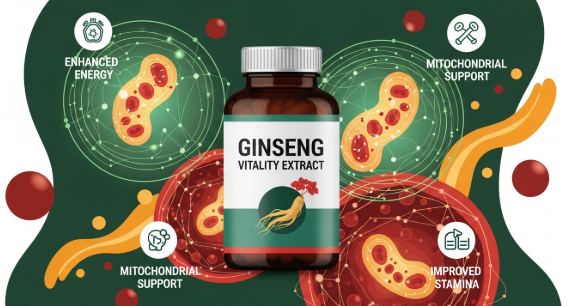
Energy begins in the mitochondria, where your cells create adenosine triphosphate (ATP)—the body’s main energy molecule. When mitochondrial function slows, everything else slows with it: cognitive speed, stamina, focus, mood, and even metabolism.
Ginseng extract helps enhance mitochondrial efficiency, improving cellular respiration and ATP output.
Ginsenosides: The Active Compounds Optimizing Energy Metabolism
Ginseng’s power comes from ginsenosides, naturally occurring compounds that:
- Increase ATP synthesis
- Improve glucose uptake
- Enhance oxygen utilization
- Support anti-fatigue pathways
- Reduce oxidative stress on cells
A 2020 overview in Journal of Ginseng Research highlights ginsenosides’ role in mitochondrial biogenesis and energy metabolism:
https://www.sciencedirect.com/journal/journal-of-ginseng-research
Key Mechanisms: Oxygen Utilization, ATP Production & Nitric Oxide
Ginseng supports energy production through multiple pathways:
- Improves oxygen uptake during activity
- Enhances NO (nitric oxide) for better circulation
- Supports HPA-axis balance under stress
- Modulates inflammatory response
- Supports physical and mental endurance
Unlike caffeine, which hijacks your nervous system, ginseng works at the cellular, hormonal, and metabolic levels.
Ginseng vs. Common Energy Solutions: A Comparative Analysis
| Solution | Mental Energy | Physical Stamina | Crash Potential | Dependency Risk | Notes |
|---|---|---|---|---|---|
| Caffeine | High | Moderate | High | High | Fast but unstable |
| Sugar/Carbs | Low | Short burst | High | Moderate | Increases insulin spikes |
| B-Vitamins | Moderate | Low | Low | Low | Supports metabolism but not energy directly |
| Ginseng Extract | High | High | Very low | Very low | Adaptogenic + cellular optimization |
Ginseng provides a non-stimulant, crash-free pathway to energy—especially Korean red Panax ginseng.
Choosing the Right Extract: A Buyer’s Guide for Maximum Efficacy
Standardized Extracts: What % Ginsenosides to Look For
For meaningful effects, look for:
- 4–8% total ginsenosides
- Standardized extract, usually labeled Panax ginseng extract
Higher isn’t always better—balance and bioavailability matter.
Extraction Methods: Water vs. Alcohol vs. Fermented
- Water Extracts: Traditional but milder
- Alcohol Extracts: Stronger, better ginsenoside extraction
- Fermented Ginseng: Highest absorption, best for low digestive tolerance
Fermented extracts are the most bioavailable.
Korean (Panax) vs. American vs. Siberian Ginseng
- Korean Panax Ginseng: Best for energy and stamina
- American Ginseng: Better for calming or stress
- Siberian (Eleuthero): Not true ginseng; milder adaptogen
For energy, Korean red ginseng wins.
Red Ginseng vs. White Ginseng
- White: Unprocessed, lighter effects
- Red: Steamed and dried, more potent, better clinical evidence
Red ginseng is standard for energy enhancement.
The Energy Protocol: How to Use Ginseng Extract Effectively
Optimal Timing
- Morning: Mental clarity + stable energy
- Pre-workout (60 min prior): Stamina + oxygen uptake
- Afternoon: Counteract the 3 PM crash without affecting sleep
Avoid late evening use if sensitive.
Dosage Guidelines
General recommendations (always follow your product’s label):
- Beginner: 200–300 mg/day
- Standard: 400–600 mg/day
- Performance: Up to 1000 mg/day (under professional guidance)
Effects build gradually over 2–4 weeks.
Synergy Stacking
- Ginseng + Rhodiola: Mental clarity + anti-fatigue
- Ginseng + Cordyceps: Endurance + VO₂ max + stamina
- Ginseng + B-Complex: Supports ATP metabolism
Cycling Strategy
To maintain sensitivity:
- Use 6–8 weeks on, 1–2 weeks off
This prevents plateaus and maintains adaptogenic benefits.
Real-World Applications: Who Benefits Most?
1. The Office Professional with Afternoon Brain Fog
Benefits:
- Better concentration
- Reduced fatigue
- More stable mood
Timeline:
- Some feel lighter energy in 3–7 days
- Full effect in 3–4 weeks
2. The Endurance Athlete Seeking a Performance Edge
Benefits:
- Increased stamina
- Improved oxygen use
- Faster recovery
Supported by studies in Journal of International Society of Sports Nutrition.
3. The Parent Managing Chronic Sleep Disruption
Benefits:
- Balanced energy
- Less stress load
- Improved resilience
Ginseng helps counteract irregular sleep patterns by supporting hormonal and mitochondrial resilience.
Important Considerations and Safety Guidelines
Potential Side Effects and Contraindications
Possible effects:
- Headache
- Digestive upset
- Insomnia (if taken too late)
Avoid if:
- Pregnant/nursing
- Experiencing acute insomnia
- Undergoing hormone-sensitive treatment
Medication Interactions
May interact with:
- Blood thinners (warfarin)
- Diabetes medications
- Stimulants
- MAOIs
Check interactions here:
https://www.drugs.com/drug-interactions/ginseng.html
Quality Red Flags
Avoid:
- Non-standardized extracts
- Unclear ginsenoside content
- Cheap “energy blend” formulas with fillers
- Unsupported claims like “instant energy cure”
Conclusion
Ginseng extract for energy boost offers a deeper, more sustainable form of vitality than stimulants ever could. By supporting mitochondrial function, oxygen utilization, stress balance, and overall resilience, ginseng acts as a foundational energy system optimizer—not a quick fix. While it doesn’t replace sleep, nutrition, or stress management, it can be a powerful ally for professionals, athletes, and anyone seeking consistent energy without jittery highs or exhausting lows.
Frequently Asked Questions About Ginseng and Energy
1. How quickly will I feel an energy boost from ginseng extract?
Some feel subtle effects within a few days; full benefits appear in 2–4 weeks.
2. Can I take ginseng extract with my morning coffee?
Yes, but start with a small dose. Combining both amplifies alertness for some people.
3. Is ginseng extract safe for long-term use?
Generally yes—when cycled properly and under professional guidance.
4. What’s the difference between ginseng “energy” and caffeine “energy”?
Caffeine stimulates the nervous system; ginseng optimizes cellular energy production.
5. Can ginseng help with Chronic Fatigue Syndrome?
It may support energy resilience, but it is not a treatment for CFS.
🇰🇷 Premium Korean Ginseng Online Shop