Ginseng cultivation has become increasingly popular as demand for herbal medicine continues to grow worldwide. Many people value ginseng for its potential benefits linked to energy, stress resilience, metabolism support, and antioxidant properties. While ginseng has a long history in traditional medicine, modern cultivation requires careful planning, scientific understanding, and responsible growing methods.
This guide explains the essential steps of ginseng cultivation based on research from agricultural science, herbal medicine, and global botanical organizations. The goal of this article is to help growers, students, and herbal enthusiasts understand how to cultivate ginseng safely and sustainably.
Disclaimer: The information in this article is for education only and not a substitute for professional medical or agricultural advice. Always consult experts before planting or consuming medicinal herbs.
🧪 What Makes Ginseng Unique?
Ginseng belongs to the Panax genus, meaning “heal-all” in Greek. It grows slowly and develops medicinal compounds called ginsenosides. According to the National Institutes of Health (NIH), these compounds may influence energy metabolism, inflammation response, and cellular health.
There are three main types:
- Panax ginseng (Korean/Asian ginseng)
- Panax quinquefolius (American ginseng)
- Panax notoginseng (Chinese Sanqi)
Although all share the same bioactive family, each species offers slightly different properties and cultivation requirements.
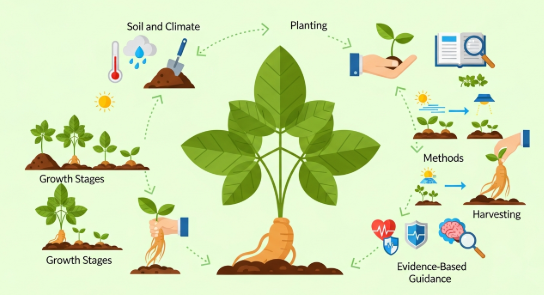
🌍 Best Climate and Soil for Ginseng Cultivation
Ginseng thrives in environments similar to natural forest floors. Therefore, choosing the right location is essential.
Ideal Growing Conditions
✔ Cool temperate climates
✔ Shade level 70–90%
✔ Well-drained soil
✔ Slightly acidic pH (5.5–6.5)
Ginseng roots rot quickly in soil that is too wet. Because of that, growers often use elevated beds or natural forest slopes.
🌱 Methods of Ginseng Cultivation
There are three primary approaches. Each has advantages depending on time, cost, and intended product quality.
1️⃣ Wild-Simulated Cultivation
This method mimics natural forest growth.
Pros:
- Low cost
- Natural appearance
- Higher market value
Cons:
- Slow growth (6–12 years)
2️⃣ Woods-Grown Method
This approach uses controlled forest environments.
Pros:
- Better yield than wild-simulated
- Natural shade and soil
Cons:
- Disease management required
3️⃣ Field Cultivation
Field growing uses artificial shade structures.
Pros:
- Fastest production (3–5 years)
- Large-scale commercial potential
Cons:
- Higher cost
- Lower value compared to wild-grown ginseng
Ginseng cultivation requires patience because the plant grows slowly and may take several years to mature.
🌿 Planting and Seed Preparation
Before planting, seeds must undergo stratification, which imitates winter dormancy. The University of Wisconsin Extension recommends storing seeds in moist sand at low temperatures for 6–10 months.
Planting Steps:
- Remove weeds and organic debris.
- Create shallow trenches around 2–3 cm deep.
- Space seeds 15–20 cm apart.
- Cover lightly with forest soil and dried leaves.
🛡 Preventing Pests and Diseases
Due to slow growth, ginseng is vulnerable to fungal disease. Healthy soil and proper spacing reduce these risks.
Common issues include:
- Root rot
- Alternaria blight
- Phytophthora fungus
Some growers use organic fungal control such as biological soil-enhancing microbes and improved drainage. Always follow agricultural safety guidelines.
🧾 Harvesting and Processing
Ginseng roots reach peak value when grown at least five years. Mature roots are firm, golden, and aromatic.
Harvest Steps:
- Loosen soil gently.
- Avoid breaking root fibers.
- Rinse carefully without scrubbing.
Drying can occur naturally or using a low-temperature dehydrator. According to research published on PubMed, low-heat drying preserves active compounds better.
🧠 Why Sustainable Ginseng Cultivation Matters
Overharvesting in the wild has caused population decline in some regions. Responsible ginseng cultivation supports biodiversity, protects native forests, and ensures future supply for research and traditional use.
Organizations like the World Health Organization (WHO) encourage maintaining ethical and sustainable herbal production to meet global health standards.
🧭 Tips for Beginner Growers
- Start with a small plot to learn the process.
- Keep a journal for soil pH, seed dates, and plant development.
- Use high-quality seeds from certified sources.
- Expect a long-term investment.
🧑⚕️ Medical Safety and Use
Even though ginseng is widely used, it may interact with:
- Blood pressure medication
- Anticoagulants
- Diabetes medication
The Mayo Clinic advises individuals with chronic illnesses or pregnant women to consult healthcare professionals before consuming ginseng.
FAQ (Schema-Friendly)
Q: How long does ginseng take to grow?
A: Depending on the method, ginseng cultivation takes 3–12 years.
Q: Can ginseng grow indoors?
A: It is difficult because ginseng requires controlled shade, humidity, and forest-like soil.
Q: Which species is best for beginners?
A: American ginseng is often easier because it adapts well to shaded forest environments.
Q: Does ginseng cultivation require fertilizers?
A: Natural compost is sometimes used, but chemical fertilizers may damage root quality.
Conclusion
Ginseng cultivation is both a science and an art. With the right soil, climate, and patience, growers can produce high-quality roots used in traditional and modern herbal health practices. Whether growing at small scale or commercial level, responsible methods ensure sustainability and long-term success.
🇰🇷 Premium Korean Ginseng Online Shop