Introduction
Ginseng for blood sugar balance has gained strong attention in both traditional medicine and modern clinical research. For centuries, Asian and North American ginseng have been used to support metabolic health. Today, scientific studies increasingly explore how ginseng may help regulate glucose levels, improve insulin sensitivity, and support overall metabolic balance.
Importantly, this article provides evidence-based, medically accurate information. It does not promote exaggerated claims. Instead, it explains what current research shows, how ginseng works in the body, and who may benefit from its use—always alongside professional medical guidance.
Understanding Blood Sugar Balance and Metabolic Health
Blood sugar balance refers to maintaining stable glucose levels throughout the day. Poor glucose control can lead to fatigue, cravings, weight gain, and long-term complications.
Key factors that affect blood sugar levels include:
- Insulin sensitivity
- Dietary carbohydrate intake
- Physical activity
- Stress hormones such as cortisol
- Inflammatory processes
When these systems fall out of balance, the body struggles to regulate glucose efficiently. As a result, interest has grown in natural compounds that support metabolic regulation.
What Is Ginseng? Types and Active Compounds
Ginseng is a perennial herb belonging to the Panax genus. The name “Panax” means “all-healing,” reflecting its long-standing role in traditional medicine.
Common types of ginseng studied for metabolic health:
- Panax ginseng (Korean ginseng)
- Panax quinquefolius (American ginseng)
Both contain bioactive compounds called ginsenosides. These compounds influence glucose metabolism, inflammation, and oxidative stress.
According to the National Institutes of Health (NIH), ginsenosides interact with multiple metabolic pathways, including insulin signaling and glucose transport mechanisms.
Source: https://www.ncbi.nlm.nih.gov
How Ginseng for Blood Sugar Balance Works in the Body
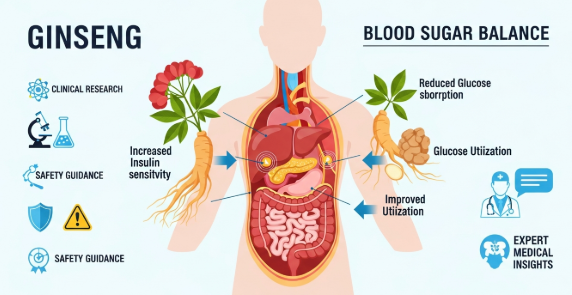
Research suggests that ginseng for blood sugar balance supports glucose regulation through several complementary mechanisms.
1. Improved Insulin Sensitivity
Ginsenosides may enhance insulin receptor activity. Consequently, cells absorb glucose more efficiently. This process helps prevent excessive glucose accumulation in the bloodstream.
2. Reduced Post-Meal Blood Sugar Spikes
Several clinical trials show that ginseng taken before meals may reduce postprandial glucose levels. This effect appears particularly relevant after carbohydrate-rich meals.
3. Antioxidant and Anti-Inflammatory Effects
Chronic inflammation contributes to insulin resistance. Ginseng contains antioxidant compounds that help reduce oxidative stress, which supports healthier metabolic signaling.
4. Modulation of Glucose Transport
Laboratory studies suggest that ginseng influences glucose transporter proteins (GLUTs), which play a key role in moving glucose into cells.
A systematic review published in Phytomedicine supports these findings.
Source: https://pubmed.ncbi.nlm.nih.gov
Clinical Evidence Supporting Ginseng and Blood Sugar Regulation
Human studies provide growing evidence for the metabolic effects of ginseng.
Key research findings:
- A randomized controlled trial found that American ginseng reduced fasting blood glucose in adults with impaired glucose tolerance.
- Another study reported improved insulin sensitivity after regular Panax ginseng supplementation.
- Meta-analyses indicate modest but consistent benefits when ginseng is used alongside lifestyle interventions.
Importantly, researchers emphasize that ginseng works best as part of a comprehensive health plan, not as a standalone treatment.
Organizations such as the World Health Organization (WHO) recognize traditional herbal medicines but stress evidence-based integration.
Source: https://www.who.int
Who May Benefit from Ginseng Supplementation?
Ginseng may be helpful for individuals seeking natural metabolic support.
Potential candidates include:
- Adults with mild glucose imbalance
- Individuals with sedentary lifestyles
- People under chronic stress
- Those seeking complementary metabolic support
However, responses vary. Therefore, professional guidance remains essential.
Safety, Dosage, and Important Precautions
While ginseng is generally well tolerated, safety remains a priority.
Common safety considerations:
- Mild side effects may include headache or digestive discomfort
- High doses may cause sleep disturbances
- Interactions may occur with diabetes medications
The NIH advises caution when combining herbal supplements with prescription drugs.
Source: https://ods.od.nih.gov
General dosage guidance:
- Typical doses range from 200–400 mg of standardized extract daily
- Standardization ensures consistent ginsenoside content
Always consult a qualified healthcare professional before starting supplementation.
Medical Disclaimer: This content is for educational purposes only and is not a substitute for professional medical advice, diagnosis, or treatment.
Comparing Ginseng with Other Herbal Options
Several herbs support metabolic health. However, ginseng offers unique advantages.
| Herb | Primary Action | Evidence Strength |
|---|---|---|
| Ginseng | Insulin sensitivity, antioxidant | Strong |
| Cinnamon | Slows glucose absorption | Moderate |
| Bitter melon | Mimics insulin activity | Emerging |
| Fenugreek | Fiber-mediated glucose control | Moderate |
Compared to others, ginseng for blood sugar balance demonstrates broader systemic effects supported by clinical trials.
How to Choose High-Quality Ginseng Products
Quality matters greatly in herbal medicine.
Look for products that:
- Specify Panax species
- Provide standardized ginsenoside levels
- Are tested by third-party laboratories
- Follow Good Manufacturing Practices (GMP)
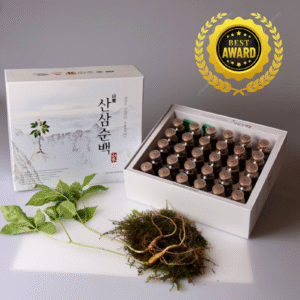
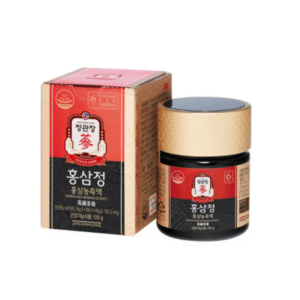
Premium Korean ginseng products often meet these criteria due to strict cultivation standards.
Conclusion
Ginseng plays a scientifically supported role in metabolic health. Evidence shows that ginseng for blood sugar balance may improve insulin sensitivity, reduce oxidative stress, and support stable glucose levels. However, it should never replace medical treatment.
When used responsibly and under professional guidance, ginseng can be a valuable addition to a holistic health strategy.
Frequently Asked Questions (FAQ)
Is ginseng safe for daily use?
Can ginseng replace diabetes medication?
No. It should only complement medical treatment.
How long does ginseng take to show effects?
Benefits may appear after several weeks of consistent use.
Which type of ginseng is best for metabolic health?
Both Korean and American ginseng show benefits in studies.
Yes, when used at appropriate doses. Medical consultation is advised.
Can ginseng cause low blood sugar?
Rarely, but caution is needed when combined with glucose-lowering drugs.
🇰🇷 Premium Korean Ginseng Online Shop