
Introduction
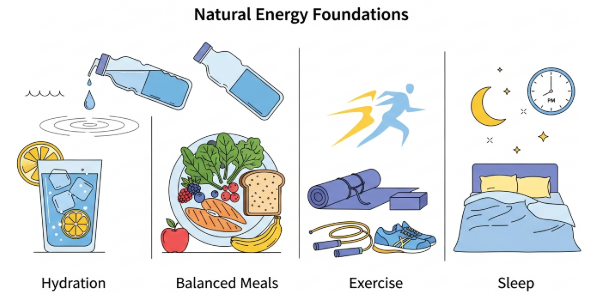
Understanding how to increase energy naturally is essential in a modern lifestyle marked by long work hours, digital fatigue, and chronic stress. Many people experience persistent tiredness even after rest. Therefore, improving energy requires more than quick stimulants. It involves supporting cellular metabolism, hormonal balance, and nervous system function through evidence-based lifestyle and nutritional strategies. This article provides a medically accurate, science-driven guide to restoring natural energy safely and sustainably.
What Does “Natural Energy” Mean in Medical Terms?
Natural energy refers to the body’s capacity to produce and use adenosine triphosphate (ATP). ATP fuels every cellular process. When ATP production declines, fatigue follows. According to the National Institutes of Health (NIH), energy levels depend on mitochondrial function, nutrient availability, oxygen delivery, and hormonal regulation.
Therefore, increasing energy naturally means optimizing these systems without relying on excessive caffeine or synthetic stimulants.
Common Causes of Low Energy
Before discussing solutions, it is important to understand why energy drops.
Key contributors include:
- Poor sleep quality
- Micronutrient deficiencies
- Blood sugar instability
- Chronic psychological stress
- Sedentary lifestyle
- Inflammatory diets
The World Health Organization (WHO) emphasizes that fatigue can also signal underlying medical conditions. Hence, persistent exhaustion should prompt professional evaluation.
How to Increase Energy Naturally Through Nutrition
Nutrition directly affects cellular energy production. Every metabolic pathway relies on adequate vitamins, minerals, and macronutrients.
1. Balance Macronutrients for Stable Energy
A balanced diet prevents rapid glucose spikes and crashes.
| Macronutrient | Role in Energy | Best Sources |
|---|---|---|
| Carbohydrates | Primary fuel | Whole grains, fruits |
| Proteins | Enzyme support | Fish, legumes, eggs |
| Healthy fats | Mitochondrial support | Olive oil, nuts |
Complex carbohydrates provide slow, sustained glucose release. Meanwhile, protein stabilizes blood sugar. Healthy fats support mitochondrial membranes.
2. Prioritize Key Micronutrients
Several nutrients play a direct role in ATP synthesis.
Critical nutrients include:
- Iron – supports oxygen transport
- Magnesium – activates ATP enzymes
- B-vitamins – essential for energy metabolism
According to PubMed-indexed research, subclinical deficiencies can impair energy even without anemia or overt disease (https://pubmed.ncbi.nlm.nih.gov).
Hydration and Energy Metabolism
Even mild dehydration reduces physical and mental performance. Research from the European Food Safety Authority shows that a 1–2% fluid deficit can impair concentration and increase fatigue.
Practical guidance:
- Drink water consistently throughout the day
- Increase intake during heat or exercise
- Monitor urine color as a hydration indicator
Hydration supports blood volume, nutrient delivery, and mitochondrial efficiency.
How to Increase Energy Naturally With Sleep Optimization
Sleep is not passive rest. It is an active metabolic process.
Why Sleep Matters
During sleep, the brain clears metabolic waste and regulates hormones such as cortisol and melatonin. Poor sleep disrupts glucose metabolism and increases inflammatory markers.
Evidence-based sleep strategies:
- Maintain consistent sleep schedules
- Avoid blue light before bedtime
- Keep bedroom temperature cool
- Limit caffeine after early afternoon
The Centers for Disease Control and Prevention (CDC) identifies sleep deprivation as a public health issue due to its metabolic consequences.
Physical Activity as an Energy Enhancer
Although counterintuitive, regular movement increases energy.
Mechanisms involved:
- Improved mitochondrial density
- Enhanced insulin sensitivity
- Increased oxygen utilization
A Harvard Medical School review confirms that moderate exercise reduces fatigue and improves alertness.
Recommended activities:
- Brisk walking
- Resistance training
- Yoga or mobility work
Short sessions performed consistently outperform sporadic intense workouts.
Stress Management and Nervous System Balance
Chronic stress drains energy through sustained cortisol release. Over time, this impairs immune function and sleep quality.
Effective stress-regulation methods:
- Mindfulness meditation
- Slow diaphragmatic breathing
- Time-restricted digital exposure
According to NIH research, these practices improve autonomic balance and perceived energy levels.
Natural Supplements With Evidence Support
Supplementation should complement, not replace, foundational habits.
Evidence-supported options:
- Magnesium glycinate – supports neuromuscular relaxation
- Coenzyme Q10 – improves mitochondrial efficiency
- Rhodiola rosea – reduces stress-related fatigue
Always consult a healthcare professional before supplementation, especially if taking medications.
How to Increase Energy Naturally Without Stimulant Dependence
Excessive caffeine creates a cycle of stimulation and crash.
Healthier alternatives include:
- Morning sunlight exposure
- Cold water face splashes
- Strategic movement breaks
These methods activate the sympathetic nervous system without depleting reserves.
Special Considerations: Medical Causes of Fatigue
Not all fatigue is lifestyle-related.
Conditions requiring evaluation include:
- Thyroid disorders
- Anemia
- Sleep apnea
- Depression
Clinical assessment ensures safety and appropriate treatment.
The Role of Herbal Medicine (Brief Scientific Perspective)
Certain adaptogenic herbs have emerging evidence for supporting stress resilience. For example, Korean ginseng has been studied for its effects on fatigue and cognitive function. However, evidence remains mixed. Therefore, it should be used cautiously and only as a supportive option, not a primary treatment, and under professional guidance (https://www.ncbi.nlm.nih.gov).
Read also: Ginseng for Stamina Support: Evidence-Based Benefits, Safety, and How to Use It Correctly
Conclusion
Learning how to increase energy naturally requires a systems-based approach. Sustainable vitality depends on nutrition quality, sleep integrity, stress regulation, hydration, and physical activity. Evidence from reputable institutions such as WHO, NIH, and PubMed supports these foundational strategies. While supplements and herbs may offer modest support, long-term energy comes from consistent, science-aligned habits. Always consult a qualified healthcare professional before making significant changes, especially when fatigue is persistent or unexplained.